


Table of Contents
- Swell Joe vs Groundwork Coffee: Quick Comparison Overview
- Roasting Approach and Coffee Quality
- Swell Joe Coffee Review: Sourcing and Flavor Profile
- Groundwork Coffee Review: Sustainability and Signature Blends
- Organic Coffee Beans: Certification and Fair Trade Standards
- Whole Bean Coffee vs Ground Coffee: Which Format Wins
- Which Coffee Should You Choose?
- Frequently Asked Questions
Last Updated: October 17, 2026
Swell Joe vs Groundwork Coffee: Quick Comparison Overview
When you're choosing between specialty coffee roasters, the decision comes down to roasting philosophy, sourcing transparency, and what matters most to your brewing style. Swell Joe vs Groundwork Coffee represents two different approaches to craft coffee, and understanding those differences helps you pick the right roaster for your palate and values.

Both companies market themselves as specialty roasters with sustainability credentials. But their roasting methods, certification approaches, and flavor profiles diverge in meaningful ways. This guide breaks down exactly where each excels and where one pulls ahead of the other.
At Surfrider Coffee, we'll walk you through the real differences between these two roasters so you can make an informed choice, or discover why a third option might serve you better.
| Roaster | Roasting Style | Organic Certification | Price Range | Best For |
|---|---|---|---|---|
| Swell Joe | Small-batch, light to medium | Not certified | Mid-range | Sourcing transparency, flavor nuance |
| Groundwork Coffee | Medium to dark roasts | USDA Organic | Budget-friendly | Certified sustainability, bold profiles |
| Surfrider Coffee | Solar-powered small-batch | Fair Trade & Organic | Mid-range | Carbon-neutral roasting, coastal values |
Roasting Approach and Coffee Quality
The roasting method shapes everything about how coffee tastes, and it's where Swell Joe and Groundwork Coffee take distinctly different paths. Swell Joe operates small-batch roasting, which means they roast smaller quantities more frequently.
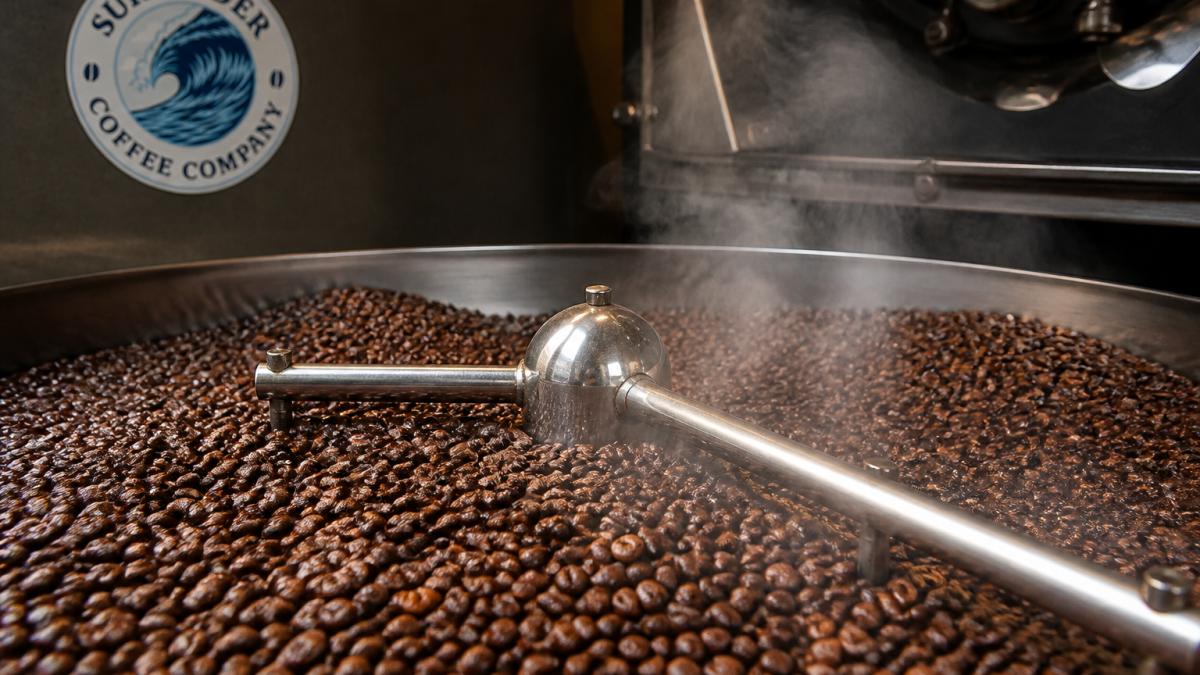
Groundwork Coffee runs larger-batch roasts, which optimizes for consistency and volume.
The trade-off matters. Neither approach is objectively better, it depends on whether you're chasing complexity or consistency.
Swell Joe's roasts tend toward light and medium roasts that highlight single-origin characteristics. Groundwork Coffee leans into medium-dark and dark roasts that emphasize body and smoothness.
Swell Joe Coffee Review: Sourcing and Flavor Profile
Swell Joe positions itself as a roaster deeply invested in direct relationships with farmers. They publish information about specific farms and regions, which gives you visibility into where your beans originate. This transparency appeals to people who want to know the story behind their coffee, not just the roast date, but the elevation, the farmer, the harvest conditions.
Their signature blends and single-origin offerings showcase lighter roasts that preserve origin flavors.
Swell Joe doesn't pursue USDA Organic certification, which some customers view as a limitation. They work with farmers using sustainable practices, but without the official seal, you're trusting their sourcing claims rather than verifying them through a third-party standard.
Their pricing sits in the mid-range for specialty coffee.
Groundwork Coffee Review: Sustainability and Signature Blends
Groundwork Coffee pursues USDA Organic certification across their coffee line. This is a meaningful commitment, it means every bean in their supply chain meets federal organic standards, with documentation and third-party auditing to back it up. For buyers who view organic certification as non-negotiable, Groundwork delivers that assurance.
BEACH HOUSE brûléed orange, dark chocolate, toasted almond →
Their signature blends reflect a philosophy of accessibility. They create blends that work across brewing methods, espresso, pour-over, French press, cold brew.
Groundwork emphasizes fair trade practices and sustainable sourcing, though like most roasters, they don't publish farm-level detail the way some specialty roasters do. You get transparency about their commitment to fair wages and environmental practices, but less granular information about specific origins and farmers.
Their pricing is competitive within the specialty coffee market.
Organic Coffee Beans: Certification and Fair Trade Standards
Most comparisons stop at "certified versus not certified." That framing hides the more useful question: what does each certification actually cover, who verifies it, and how can you check the claim yourself? Here is the mechanism-level breakdown.
USDA Organic. The USDA National Organic Program regulates how coffee can be grown, handled, and labeled as organic. For a bag to carry the USDA Organic seal, the coffee must be grown without prohibited synthetic pesticides and fertilizers, handled through a certified supply chain, and audited by a USDA-accredited certifying agent. The seal is a production standard, it covers farming and handling inputs, not farmer pay, not roast freshness, and not carbon footprint. Groundwork Coffee's line carries USDA Organic certification.
Fair Trade. Fair Trade certification is a separate standard focused on farmer income and working conditions (Fairtrade standards). It typically includes a minimum price floor, a community development premium, and requirements around labor practices and democratic organization. A coffee can be USDA Organic without being Fair Trade certified, and vice versa, the two seals answer different questions.
Swell Joe's position. Swell Joe does not pursue USDA Organic certification. Their sourcing story leans on direct relationships and farm-level transparency, published information about specific farms and regions, rather than a third-party seal. That is a legitimate framework.
How to verify either claim. Check the certifying agent listed on the bag, look up the operation in the USDA Organic Integrity Database, and confirm whether a Fair Trade mark appears with an identifiable certifier.
For buyers who want a verified baseline, Groundwork's USDA Organic certification is the clearer paper trail. For buyers who value direct farm relationships and published sourcing detail over seals, Swell Joe's model is coherent.
Whole Bean Coffee vs Ground Coffee: Which Format Wins
Whole bean coffee stays fresher longer than pre-ground coffee. If you have any control over your purchasing decision, whole bean is the stronger choice.
Both Swell Joe and Groundwork Coffee offer whole bean options. Whole bean is their primary format.
Ground coffee makes sense only if you lack a grinder or can't grind fresh.
BEACH HOUSE brûléed orange, dark chocolate, toasted almond →
For maximum flavor, buy whole bean from either roaster and grind just before brewing. The roast date matters. Both Swell Joe and Groundwork print roast dates on their bags.
Which Coffee Should You Choose?
The honest answer depends on three things: how you brew, what flavor profile you want, and whether you need third-party certification.
By brewing method.
- Espresso: Groundwork's medium-to-dark profiles are built for milk drinks and traditional shots, the darker roast gives you body and sweetness that cut through milk. Swell Joe's lighter roasts can work as espresso, but they reward precise dialing and tend to shine as straight shots rather than milk-based drinks.
- Pour-over: Swell Joe is the stronger pick. Light and medium roasts preserve the acidity and origin character that pour-over is designed to highlight, you taste the difference between an Ethiopian and a Central American offering.
- Cold brew: Groundwork's darker, fuller-bodied roasts extract well over long steeps and hold up against dilution and milk. A light roast cold brew can taste thin by comparison.
- French press: Either works; choose by flavor preference. Groundwork for a rounder, chocolatey cup, Swell Joe for a brighter, more layered one.
By drinker profile.
- The origin explorer: Swell Joe. Small-batch roasting and single-origin focus mean the bean's character comes through, and published farm detail lets you follow the story.
- The consistency seeker: Groundwork. Larger batches produce predictable flavor batch after batch, useful if you want the same cup every morning.
- The certification-first buyer: Groundwork. USDA Organic is independently audited; Swell Joe's sustainability work is not certified.
- The milk-drink drinker: Groundwork. Darker roasts hold their structure against milk.
On value. Headline bag prices tell you little. Compare cost per brewed cup instead: a 12-ounce bag at a typical 1:16 brew ratio yields roughly 25 to 30 cups depending on dose, so a few dollars of difference per bag works out to cents per cup. Factor in shipping thresholds and subscription discounts, which can swing the effective per-pound price more than the sticker price does. Groundwork generally sits at a lower entry point; Swell Joe's mid-range pricing reflects its small-batch, single-origin positioning. Neither is overpriced for what it is, the question is whether you are paying for certification, for origin nuance, or for both.
On freshness. Both roasters print roast dates, which is the single most useful buying signal. Buy whole bean, check the roast date, and aim to brew within two to three weeks of roasting for peak flavor.
The third option. If you want small-batch roasting, published sourcing, and certified sustainability in one bag, that combination is exactly what Surfrider Coffee was built around. Our Beach House Blend pairs Fair Trade and Organic certification with solar-powered roasting, and our single origin offerings rotate seasonally so you can explore origins the way Swell Joe fans expect. You get the certification paper trail Groundwork buyers want without giving up the small-batch character Swell Joe drinkers value.
Frequently Asked Questions
How do Swell Joe and Groundwork Coffee compare on sourcing and sustainability?
Both brands prioritize ethical sourcing and environmental responsibility, but their approaches differ. Swell Joe emphasizes direct relationships with farmers and transparency in their supply chain, while Groundwork focuses on organic certification and carbon-neutral operations. When evaluating swell joe vs groundwork coffee, consider which sustainability practice aligns with your values: direct-trade relationships or certified organic and carbon-neutral processes. Surfrider Coffee combines both approaches, using solar-powered roasting and Fair Trade organic beans like our Beach House Blend ($23.00), offering a third perspective on what sustainable specialty coffee can deliver.
What is the main difference between whole bean coffee vs ground coffee for these roasters?
Whole bean coffee preserves freshness longer and allows you to grind just before brewing, maximizing flavor complexity. Ground coffee offers convenience but loses aromatic compounds faster once exposed to air. Both Swell Joe and Groundwork offer whole bean options as their primary format, recognizing that specialty coffee enthusiasts prefer to control grind size for their brewing method. If you're choosing between whole bean coffee vs ground coffee, whole bean is the better choice for single-origin and specialty blends, where roast date and grind consistency directly impact the tasting experience.
Are organic coffee beans worth the extra cost compared to conventional options?
Organic certification ensures beans are grown without synthetic pesticides or fertilizers, which can improve soil health and reduce environmental impact. For organic coffee beans, you're paying for both verified farming practices and typically more selective harvesting and processing. Brands like Groundwork emphasize organic certification as a core value, and Surfrider's Beach House Blend is Fair Trade and organic, delivering both ethical sourcing and environmental responsibility.
Which coffee roaster is better for espresso brewing?
Espresso requires a roast profile that balances body, sweetness, and crema production. Medium to medium-dark roasts typically perform best for espresso, as they develop enough oils to create crema while retaining origin character. Groundwork's espresso-focused blends are engineered for consistent crema and body, while Swell Joe's roasts tend toward lighter, more origin-expressive profiles. For espresso lovers, Surfrider's Mavericks Blend ($21.95) is specifically recommended as a medium-dark roast for espresso, offering full body and bittersweet chocolate notes that pull beautifully as shots.