

Table of Contents
- What Makes Coffee Beans Eco Friendly in 2026?
- The Lifecycle Assessment of a Coffee Bean
- Fair Trade Coffee Certification Standards Explained
- The Benefits of Organic Coffee Beans for Your Cup and the Planet
- How to Identify Sustainable Coffee Brands You Can Trust
- Regenerative Agriculture and Biodiversity in Coffee Farming
- Carbon-Neutral Roasting and Water Usage Metrics to Know
- Home Composting Guide for Coffee Grounds
- Conclusion: Brewing a Greener Future
- Frequently Asked Questions
Last Updated: September 28, 2026
What Makes Coffee Beans Eco Friendly in 2026?
Eco friendly coffee is coffee grown, processed, roasted, and packaged in ways that reduce harm to soil, water, wildlife, and the people who farm it. At Surfrider Coffee, we roast with solar energy and carbon-neutral methods, but the label "eco friendly" covers far more than how beans are heated. It starts in the soil and ends in your compost bin.
The best eco friendly coffee beans 2026 buyers choose tend to share three traits: transparent sourcing, low-impact processing, and packaging that breaks down. Most grocery-store bags fail at least one of these tests, usually the last one.
Below, we'll break down what actually makes a bean sustainable, how certifications differ, and how to spot greenwashing before you spend money on it.
The Lifecycle Assessment of a Coffee Bean
A lifecycle assessment (LCA) of coffee measures environmental impact from seed to sip. It tracks water use, carbon emissions, land use, and waste at every stage: farming, processing, shipping, roasting, brewing, and disposal. Most coffee guides stop at the label. An LCA is what tells you whether the label is doing real work.
Here is how the stages typically stack up, and where the leverage actually sits.
1. Farming (the dominant stage). This is where the majority of a coffee's carbon and land-use footprint originates. Synthetic nitrogen fertilizer is energy-intensive to manufacture and releases nitrous oxide, a potent greenhouse gas, when applied. Land clearing for new sun-grown plots releases stored soil carbon and eliminates the shade canopy that would otherwise sequester it. Farms that avoid synthetic inputs, keep trees standing, and add compost or cover crops cut emissions at the source rather than offsetting them later.
2. Processing (the water stage). After harvest, cherries are turned into green beans by one of three main methods, and the choice drives water use more than any other decision:
- Washed (wet) process: fruit is removed with large volumes of water. Highest water demand, cleanest cup profile.
- Honey process: some fruit mucilage is left on the bean. Moderate water use, sweeter body.
- Natural (dry) process: cherries dry whole in the sun. Lowest water use, fruit-forward flavor.
For a water-stressed growing region, a natural or honey process can be the single most consequential environmental choice on the bag, and almost no buying guide mentions it.
3. Shipping. Green beans travel by ocean freight, which is far less carbon-intensive per pound than air freight. The distance matters less than the mode. A bag that crossed an ocean by ship can have a smaller transport footprint than one flown a shorter distance.
4. Roasting. Roasting is energy-intensive but brief. The footprint depends almost entirely on the energy source: a solar-powered or otherwise renewable roastery cuts this stage sharply compared with one running on natural gas or grid electricity.
5. Brewing and disposal. The consumer stage is small per cup but adds up across a household. Drip brewing, espresso, and pour-over differ in energy and water use, and spent grounds sent to landfill produce methane as they decompose. Composting them instead closes the loop (see the composting section below).
Why this matters when you buy. The LCA lens tells you where your dollar does the most good. A roastery with beautiful compostable packaging but beans grown on cleared, heavily fertilized land has optimized the smallest stage. A roastery that can speak to farming practices, processing method, and roasting energy is addressing the stages that actually move the number.
U.S. Environmental Protection Agency on lifecycle assessment
Fair Trade Coffee Certification Standards Explained
Fair trade coffee certification standards set minimum prices, labor protections, and environmental rules for farmers and cooperatives. The goal is simple: farmers get paid fairly, and buyers get proof of ethical sourcing.
Certification bodies audit farms for safe working conditions, bans on child labor, and restricted pesticide use. In exchange, certified cooperatives receive a price floor and a community development premium. The catch is that certification costs money and paperwork, which shuts out some smallholders. That's why some roasters now run direct trade programs alongside or instead of certification.
| Certification | Focus | Best For |
|---|---|---|
| Fair Trade | Farmer wages, labor rights | Ethical sourcing priorities |
| USDA Organic | No synthetic pesticides | Pesticide-free farming |
| Bird-Friendly | Shade habitat, biodiversity | Wildlife conservation |
| Rainforest Alliance | Ecosystem + worker standards | Broad sustainability |
The Benefits of Organic Coffee Beans for Your Cup and the Planet
Organic coffee beans are grown without synthetic pesticides or fertilizers, which protects farm workers, waterways, and soil health. For your cup, organic beans often carry cleaner, more distinct flavor because they come from smaller, shade-grown plots.
The environmental case is stronger than the health case. Pesticide-free farming reduces runoff into streams and supports biodiversity on and around the farm. Organic certification also requires buffer zones between crops and conventional land, which limits cross-contamination.
What most guides miss: organic doesn't automatically mean sustainable.
USDA Organic certification standards
How to Identify Sustainable Coffee Brands You Can Trust
Look for specific, verifiable claims instead of vague green language. "Eco friendly" and "sustainable" mean nothing on their own. A trustworthy brand names its certifications, its farms, and its roasting energy source.
Here's a quick checklist to run before you buy:
- Names the specific farm, cooperative, or region
- Lists at least one third-party certification
- Discloses roasting energy (solar, carbon-neutral, etc.)
- Uses compostable or recyclable packaging
- Publishes a sourcing or impact report
Regenerative Agriculture and Biodiversity in Coffee Farming
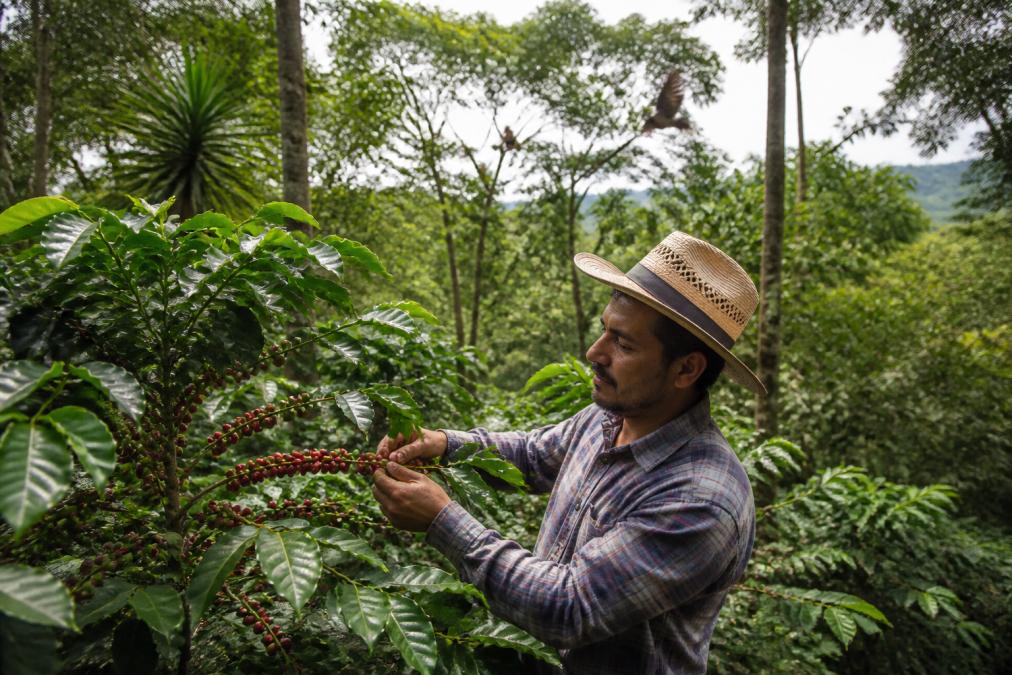
Regenerative agriculture goes beyond "do no harm" to actively rebuild soil, water cycles, and habitat. Coffee farms using these methods plant cover crops, compost waste, and keep native trees standing.
Carbon-Neutral Roasting and Water Usage Metrics to Know
Carbon-neutral roasting means the emissions from roasting are measured and then either eliminated through clean energy or offset through verified programs. Water usage metrics track how much water it takes to process and brew each pound of coffee. Both are places where the marketing language and the actual practice can diverge, so it pays to know the mechanisms.
Carbon: reduction versus offsets.
- Reduction: the roastery runs on renewable energy, solar arrays, wind contracts, or a grid mix that is already low-carbon, so the emissions are never created. This is the harder path and the more durable one.
- Offsets: the roastery emits as usual and pays for equivalent reductions elsewhere, such as reforestation or methane-capture projects. Offsets can be legitimate, but quality varies widely, and the emissions still happened.
Water: the metric almost nobody publishes.
- Washed process: traditionally the most water-intensive, because fruit is removed with repeated rinses. Some mills now recirculate and reuse that water, which cuts demand substantially, but you have to ask.
- Honey process: uses less water than washed, because some mucilage is left to dry on the bean.
- Natural process: uses the least water of the three, since the cherry dries whole in the sun with no washing step.
What to ask a roaster.
- Is roasting powered by renewable energy, or offset, or both?
- Which processing method was used, and does the mill recirculate water?
- Is there a published impact or sourcing report with actual figures?
ENERGY STAR on commercial energy efficiency
Home Composting Guide for Coffee Grounds
Coffee grounds are a composting powerhouse, adding nitrogen that balances the carbon-heavy browns in your pile. Used grounds break down fast and improve soil structure in gardens.
A simple home method:
- Collect spent grounds in a sealed container to avoid mold
- Layer grounds with dry leaves or cardboard at roughly 1 part green to 3 parts brown
- Turn the pile weekly to keep it aerated
- Keep it as damp as a wrung-out sponge
- Expect finished compost in a few months
Conclusion: Brewing a Greener Future
Choosing genuinely sustainable coffee takes more effort than reading a label, but the payoff reaches from farm soil to your kitchen counter. Look for transparency, real certifications, and roasters who can explain exactly how their beans were grown and heated.
Frequently Asked Questions
What makes coffee beans eco friendly?
Eco friendly coffee beans are grown using sustainable farming methods that protect soil, water, and biodiversity. Key factors include organic certification, shade-grown cultivation, fair trade practices, and carbon-neutral roasting. These beans avoid synthetic pesticides, support wildlife habitats, and often come from farms that prioritize worker welfare and supply chain transparency. Look for third-party certifications like USDA Organic, Fair Trade, and Bird-Friendly to ensure your beans meet these standards.
How can I tell if my coffee is ethically sourced?
Check for certifications such as Fair Trade, Direct Trade, or Rainforest Alliance on the packaging. These labels verify that farmers receive fair wages and work in safe conditions. Also look for brands that publish detailed sourcing information, including farm names and harvest dates. Transparency about supply chains and a commitment to environmental stewardship are strong indicators of ethical sourcing. When in doubt, contact the roaster directly and ask about their sourcing practices.
Are organic coffee beans better for the environment?
Yes, organic coffee beans are generally better for the environment because they are grown without synthetic pesticides and fertilizers, which reduces chemical runoff into soil and water. Organic farming also promotes healthier soil and supports biodiversity. However, organic certification alone does not address carbon emissions from roasting or shipping. For the greatest environmental benefit, combine organic beans with brands that use carbon-neutral roasting and sustainable packaging.
What does carbon-neutral coffee roasting mean?
Carbon-neutral coffee roasting means the roaster offsets or eliminates the carbon dioxide emissions produced during the roasting process. This can be achieved by using renewable energy sources like solar power, improving energy efficiency, or purchasing carbon offsets. Some roasters also invest in reforestation projects to balance emissions. Choosing carbon-neutral coffee supports efforts to reduce the industry's carbon footprint and combat climate change.
The gap between "green" marketing and real environmental practice comes down to proof. Surfrider Coffee roasts with solar energy and carbon-neutral methods, sources with supply chain transparency, and supports conservation through every bag sold. Order coffee from Surfrider Coffee and taste the difference that responsible sourcing and craft roasting make in your cup.