

Table of Contents
- The Surprising History of Surf Culture Coffee
- Why Coffee Became the Ritual of Beach Culture
- The Authenticity Tax: What You Pay for Real Niche Marketing
- Sustainable Coffee Roasting Practices That Actually Matter
- How to Identify Ethical Coffee Brands Without Getting Fooled
- The Economics of Lifestyle Branding: Who Really Profits?
- Conclusion: Surf Culture Coffee Is Marketing, But That's Not the Whole Story
- Frequently Asked Questions
Last Updated: October 2, 2026
The Surprising History of Surf Culture Coffee
Surf culture coffee is a branding phenomenon that ties specialty coffee to coastal surf lifestyles, and it is far more than a marketing gimmick. The connection dates back to mid-century beach communities, where surfers gathered at local cafes before and after sessions. Those early hangouts became the original "third space" for surfers, a neutral ground between home and the ocean. This guide from Surfrider Coffee examines whether surf culture coffee is just marketing or something with real substance behind it.
The story starts in the 1950s and 1960s, when surf shops along the coast doubled as gathering spots. Coffee was cheap, communal, and always on. As surf culture grew into a global lifestyle, the coffee ritual grew with it. What began as a practical habit, warming up after cold dawn sessions, became a shared identity marker. Today, surf culture coffee sits at the intersection of consumer culture and brand authenticity, and the question of whether it is genuine or manufactured deserves a real answer.
A Timeline Most Brand Histories Skip
The surf-coffee overlap did not arrive with the first wave logo on a bag. It moved through four distinct phases, and each one explains why the modern premium exists.
- 1950s-1960s: The shop as clubhouse. Surf shops were small, cash-poor, and social. Owners kept a pot on because customers lingered, and lingering sold boards. Coffee was an operating cost, not a product line. The ritual was real precisely because nobody was monetizing it.
- 1970s-1980s: The second-wave coffee shift. As drip coffee and the first specialty roasters spread, cafes began replacing diners as the default morning stop. Coastal towns got their own roasters, and the surf break and the espresso bar started sharing the same morning window.
- 1990s-2000s: The third-wave reset. Third-wave coffee reframed beans as an agricultural product with origin, process, and elevation worth naming. That vocabulary, single origin, washed, micro-lot, gave surf brands a way to attach a lifestyle story to a product that could actually back it up.
- 2010s-present: The lifestyle brand era. Direct-to-consumer selling, social media, and the collapse of retail gatekeepers let a small roaster build a national identity around a coastline. This is the phase where the "is it just marketing" question became unavoidable, because the aesthetic became cheaper to produce than the coffee.
The through-line is that coffee shops became the primary third space for surf culture not when brands decided to sell coffee, but when the coffee itself got good enough to deserve the room. That is the difference between a trend and a tradition.
Smithsonian history of American coffee culture
Why Coffee Became the Ritual of Beach Culture
Coffee became the ritual of beach culture because it fits the rhythm of surf life: early mornings, cold water, and a slow warm-up afterward. A caffeine ritual before dawn patrol is practical, and the post-session cup is social. That combination made coffee the default drink of coastal communities long before specialty roasters noticed the trend.
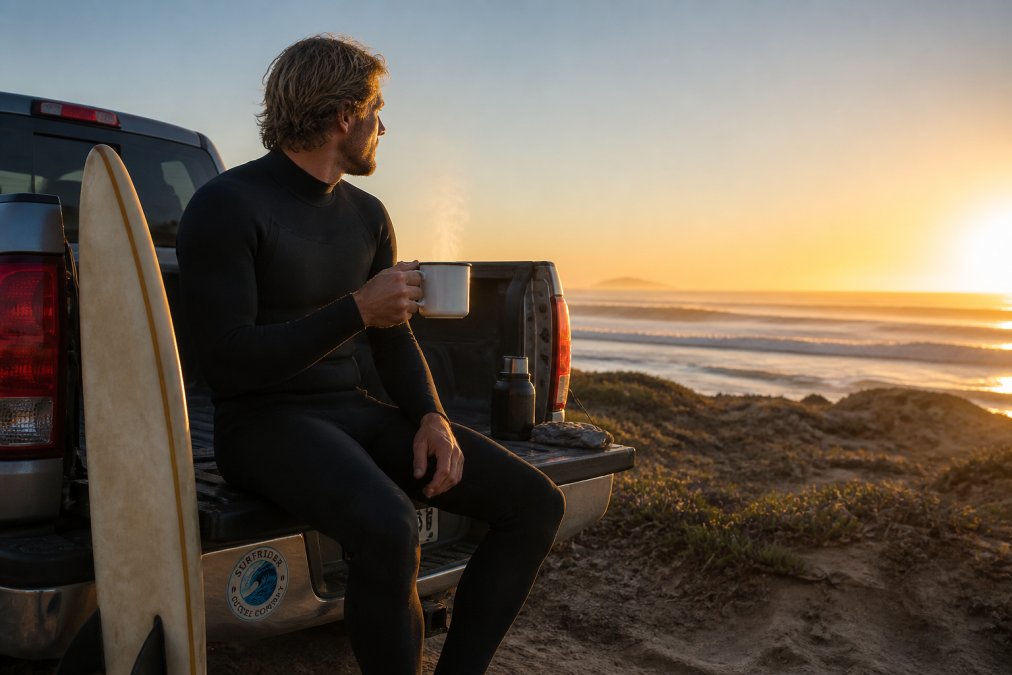
The Authenticity Tax: What You Pay for Real Niche Marketing
The authenticity tax is the extra amount shoppers pay for a brand that genuinely lives its stated values rather than just claiming them. In niche marketing, that premium is real and often justified, but it is also easy to fake. This is where surf culture coffee gets tested. Discerning whether a roaster is genuinely committed to ethical sourcing or merely engaging in transparent coffee marketing requires looking past the aesthetic to the actual impact of their supply chain.
Sustainable Coffee Roasting Practices That Actually Matter
Sustainable coffee roasting practices that actually matter are the ones that reduce measurable energy use and waste, not the ones that only appear in a mission statement. Solar-powered roasting, carbon-neutral operations, and efficient equipment are the levers that change real outcomes.
Here is what separates substance from slogans:
- Energy source: Solar and renewable-powered roasting cuts the carbon footprint of the roast itself, which is one of the most energy-intensive steps in coffee production.
- Roasting efficiency: Modern roasters recover heat and reduce batch waste, which lowers both emissions and cost.
- Sourcing transparency: Knowing the farm, the process, and the elevation lets a roaster make quality and ethics decisions, not just marketing ones.
- Packaging and shipping: Recyclable or compostable packaging and consolidated shipping reduce the footprint after the beans leave the roastery.
How to Identify Ethical Coffee Brands Without Getting Fooled
You can identify ethical coffee brands by checking four things: sourcing transparency, roasting method, third-party verification, and where the profits go. If a brand cannot answer those clearly, the ethics claim is decoration.
Use this checklist before you buy:
NORTH SHORE BLEND bittersweet →
- Does the brand name the farms, regions, or cooperatives it sources from?
- Does it explain its roasting method, including energy source?
- Does it publish conservation or community commitments with specifics?
- Does it avoid vague terms like "eco-friendly" without proof?
- Does it show how much of each sale supports a cause?
The Economics of Lifestyle Branding: Who Really Profits?
The economics of lifestyle branding come down to premium pricing power. When a brand successfully attaches itself to a lifestyle, it can charge more than a commodity roaster for a comparable product, because customers are buying identity alongside flavor. That premium is the entire business model. The useful question is not whether the premium exists, it is where the premium actually goes.
Where the Premium Goes
A bag of coffee carries several cost layers, and lifestyle branding touches only some of them. A rough mental model, using commonly reported industry ranges rather than any single company's books:
- Green coffee (the beans): Typically the largest single input for a specialty roaster, and the layer most exposed to origin, process, and lot size. A named micro-lot costs more than a blended commodity contract, and that difference is quality, not vibe.
- Roasting and production: Energy, labor, equipment depreciation, and batch loss. Solar and heat-recovery systems raise upfront capital costs but lower per-pound energy spend over time, a real trade-off, not a slogan.
- Packaging and fulfillment: Bags, valves, labels, shipping, and returns. Compostable or recyclable packaging usually costs more per unit than conventional film, which is a genuine premium driver.
- Marketing and brand: Design, photography, athlete or ambassador deals, events, and paid media. This is the layer skeptics mean by "vibe," and it is real, but it is rarely the whole premium.
- Margin and mission: What is left after costs, split between the business and any cause commitment.
The Authenticity Tax, Priced
This is where the authenticity tax becomes measurable rather than rhetorical. Two bags can sit at the same shelf price and distribute that price very differently. The one with transparent sourcing, a stated roast method, and a published cause allocation is paying the tax. The one with a wave graphic and no disclosures is collecting it.
Who Actually Captures the Value
Follow the money past the roaster and the picture gets more interesting. In a lifestyle-branded bag, value typically flows to four groups: the producer, the roaster, the brand, and the cause. A commodity bag concentrates value at the roaster and the retailer. A lifestyle bag redistributes some of it toward the brand story and, when the brand is serious, toward the producer and the cause.
Conclusion: Surf Culture Coffee Is Marketing, But That's Not the Whole Story
Surf culture coffee is marketing, and that is not a dirty word. Every lifestyle brand is marketing. The real question is whether the marketing points to something real. Some brands use the surf aesthetic as a costume. Others, like Surfrider Coffee, roast with solar energy, use carbon-neutral methods, and put money back into the coastal community that inspired the brand in the first place.
Frequently Asked Questions
What defines authentic surf culture coffee?
Authentic surf culture coffee goes beyond aesthetics. It typically involves direct ties to surf communities or surfers, transparent sourcing, and sustainable roasting practices like solar energy or carbon-neutral methods. The key is whether the brand supports the culture it borrows from, not just uses its imagery. Look for named collaborations, donations to coastal causes, and verifiable environmental claims.
How does environmental sustainability impact surf-inspired coffee brands?
Sustainability is central to surf-inspired coffee because the culture depends on clean oceans and healthy coastlines. Brands that use solar-powered roasting, carbon-neutral shipping, and ethically sourced beans reduce their environmental footprint. This matters to consumers who want their coffee to align with their values. However, sustainability claims should be backed by third-party certifications or detailed reports, not just marketing language.
How can consumers identify greenwashing in coffee brands?
Watch for vague terms like 'eco-friendly' without specifics. Check for certifications such as Fair Trade, Rainforest Alliance, or USDA Organic. Look for detailed sourcing information, named farms, and measurable sustainability goals. If a brand claims carbon neutrality, ask whether it has a public report or third-party verification. Transparency is the clearest signal that a brand is serious about sustainability.
Is the surf aesthetic in coffee marketing misleading?
Sometimes. Some brands use surf imagery purely to signal a lifestyle without any real connection to surf communities or environmental action. That's misleading. But other brands, like those founded by surfers or those that donate to ocean conservation, have genuine ties. The difference is whether the brand's actions match its imagery. Consumers can check for community involvement, sourcing transparency, and measurable impact.
The challenge is simple: most coffee brands ask you to trust a label. Surfrider Coffee shows you the work behind it, from solar-powered, carbon-neutral roasting to blends like the North Shore Blend and Rincon Blend that fund real conservation. Get started with Surfrider Coffee and taste the difference between marketing and substance.