

Table of Contents
- The Real Cost Drivers Behind Craft Coffee
- Hand-Picking, Labor, and the Scarcity Factor
- Single-Origin vs. Commodity Coffee: What You're Paying For
- The Difference Between Light and Dark Roast Coffee
- How Sustainable Coffee Roasting Practices Affect Price
- The Benefits of Direct Trade Coffee for Farmers and Your Cup
- The Cost of Convenience vs. the Cost of Quality
- Frequently Asked Questions
Last Updated: September 30, 2026
The Real Cost Drivers Behind Craft Coffee
Craft coffee costs more because it is built on hand labor, small harvests, and quality control at every step, not because of marketing. At Surfrider Coffee, we see this firsthand: a single 12-ounce bag can represent dozens of human decisions, from selective picking at high altitude to a roast profile dialed in batch by batch. This guide breaks down why craft coffee costs more, where each dollar actually goes, and how to judge whether a bag is worth its price.
That last question matters more than ever. The gap between commodity coffee and craft coffee has widened, and the reasons are structural, not cosmetic. Below, we walk through the real cost drivers, the trade-offs behind convenience, and the value you should expect in return.
Hand-Picking, Labor, and the Scarcity Factor
Craft coffee starts with selective harvesting, and selective harvesting is slow. Pickers return to the same trees multiple times per season, taking only ripe cherries and leaving the rest to mature.
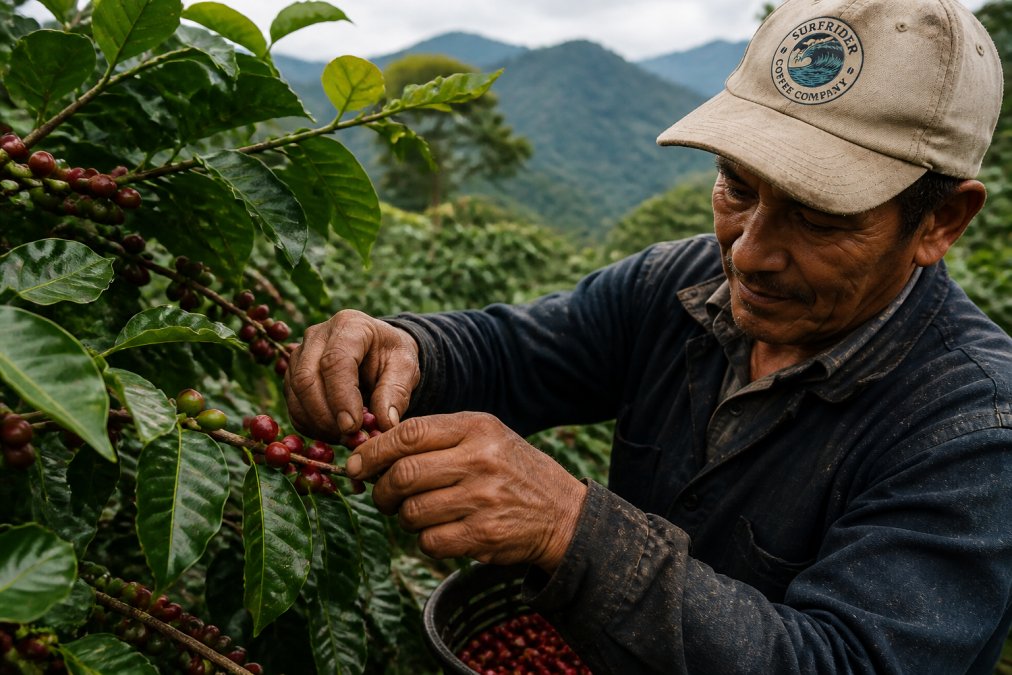
That labor intensity shows up directly in the farm-gate price. A common mistake buyers make is assuming all coffee is picked the same way. It isn't. Commodity harvesting often strips whole branches at once, ripe and unripe together, which is faster and cheaper but adds defects that have to be sorted out later or simply accepted.
Scarcity compounds the cost. Small farms on steep slopes produce limited yields, and a single micro-lot may only fill a few hundred bags. When supply is that thin, even modest demand pushes prices up.
Single-Origin vs. Commodity Coffee: What You're Paying For
Single-origin coffee is traceable to one farm, cooperative, or region, while commodity coffee blends beans from many sources into a uniform product. Traceability is the difference you're paying for, and it costs money to maintain at every step.

Start with the physical separation. A single-origin lot cannot share a processing line, a drying bed, a storage silo, or a shipping container with another lot without losing its identity. That means a mill runs a small batch through equipment that would otherwise be handling ten times the volume, and a roaster dedicates a full production slot to a few hundred pounds instead of a few thousand. Commodity supply chains do the opposite: they commingle beans from dozens of origins to hit a consistent flavor target at the lowest possible cost. Commingling is efficient. Separation is not.
A single-origin lot also requires its own paperwork trail: farm records, processing logs, export documentation, and import filings that follow the beans from harvest to roaster. Blending, by contrast, lets buyers smooth out price swings by mixing cheaper and pricier beans together. That flexibility is exactly what single-origin gives up.
What most guides miss is that traceability also carries risk. If one small lot fails a quality check, there's no backup supply to fall back on. The roaster absorbs that risk, and some of it lands in the price.
- Single-origin: one source, distinct flavor, limited supply, full separation at every step
- Commodity blend: many sources, consistent but generic flavor, high volume, commingled for efficiency
- Craft blend: curated mix of high-quality lots, balanced for a specific roast profile, still traceable to named farms
The economic reality is that a single-origin bag carries costs a blend simply does not: separate freight, separate storage, separate quality testing, and the working capital tied up in a small lot that sells slowly. Those costs are real, and they show up in the price per pound long before the coffee reaches a shelf.
The Difference Between Light and Dark Roast Coffee
The difference between light and dark roast coffee comes down to how long beans stay in the roaster, and that timing affects both flavor and cost. Light roasts stop earlier, preserving more of the bean's origin character. Dark roasts spend longer in the drum, developing deeper, smokier notes.
Longer roasts mean more energy, more time, and more bean weight lost to moisture and expansion. Small-batch roasting amplifies this: a craft roastery runs smaller loads, checks each batch by sight and smell, and adjusts the roasting profile rather than pushing everything through on one setting.
The trade-off is real. Light roasts showcase flavor complexity but leave less margin for error. Dark roasts are more forgiving but can mask the very characteristics a single-origin lot was chosen for. Neither is "better." They're different products with different production costs.
How Sustainable Coffee Roasting Practices Affect Price
Sustainable coffee roasting practices raise upfront costs and lower long-term ones, and that tension explains part of the price premium. Solar-powered roasting equipment, for example, requires capital investment that a conventional gas roaster doesn't.
At Surfrider Coffee, our roasting runs on solar energy with carbon-neutral methods, which is a deliberate cost decision rather than a marketing add-on. Those systems need maintenance, monitoring, and sometimes backup capacity on cloudy days.
BEACH HOUSE brûléed orange, dark →
Sustainability also extends upstream. Shade-grown farming, water treatment at the washing station, and fair labor standards all add cost at the farm level. Buyers who want verified sustainability are paying for the verification itself: audits, certifications, and documentation that most commodity supply chains skip entirely.
The Benefits of Direct Trade Coffee for Farmers and Your Cup
The benefits of direct trade coffee show up on both ends of the supply chain: farmers earn more per pound, and roasters get more control over quality. Direct trade cuts out some intermediary layers, which means a larger share of the retail price reaches the farm.
That extra income matters. It funds better processing equipment, agronomy training, and community infrastructure, all of which improve the next harvest. Better processing means fewer defects, and fewer defects mean a cleaner, more consistent cup.
For the buyer, direct trade also means faster feedback. When a roaster and a producer talk directly, problems get solved at the source instead of being discovered months later in a warehouse. That responsiveness is hard to put a number on, but it's part of what separates a great bag from an inconsistent one.
The Cost of Convenience vs. the Cost of Quality
The cost of convenience is paid in flavor and traceability; the cost of quality is paid upfront, in dollars. Most coffee drinkers never see this trade-off spelled out, but it's the quiet argument underneath every price tag.
Here's the breakdown most articles skip: the retail markup structure. A craft bag's price is not just green coffee plus profit. It's green coffee, plus roasting loss, plus packaging, plus shipping, plus the roaster's labor and overhead, plus retail margin. Each layer compounds.
Start with roast loss. Coffee beans lose weight during roasting, commonly in the range of 12% to 20%, depending on roast level and starting moisture. A roaster who buys a pound of green coffee may end up with roughly 13 to 14 ounces of roasted beans. That shrink is baked into the price per bag before anything else is added.
Then packaging. Craft roasters typically use one-way degassing valves and barrier bags to protect freshness, which cost more per unit than the simple packaging commodity brands use. Small-batch roasters also can't buy packaging in the same volumes, so their per-unit cost is higher.
Then shipping. Green coffee moves by container ship from origin, then by truck to the roastery, then by parcel carrier to the customer. Each leg adds cost, and small roasters rarely have the freight volume to negotiate the lowest rates.
Finally, labor and overhead.
Here's the practical way to think about it:
| Factor | Convenience Coffee | Craft Coffee |
|---|---|---|
| Harvesting | Strip-picked, mixed ripeness | Hand-picked, selective |
| Sourcing | Blended, untraceable | Single-origin or named lots |
| Roasting | Large batch, uniform | Small-batch, profile-tuned |
| Roast loss absorbed | Spread across huge volume | Concentrated in small batches |
| Packaging | Standard, high-volume | Barrier bags, degassing valves |
| Price driver | Volume and efficiency | Labor, scarcity, quality control, shrink |
Frequently Asked Questions
Why is craft coffee suddenly more expensive?
Craft coffee prices reflect rising costs at every stage: labor shortages for hand-picking, climate change reducing yields, and higher export tariffs. Small-batch roasters also pay more for specialty-grade beans with cupping scores above 80. Unlike mass-produced coffee, craft roasters often absorb fair trade and organic certification costs. These factors, combined with limited production runs, push prices higher than commodity coffee.
What is the difference between commodity coffee and craft coffee?
Commodity coffee is mass-produced, often blended from multiple origins, and graded by the lowest common denominator. Craft coffee is typically single-origin or carefully blended, hand-picked, and roasted in small batches to highlight unique flavors. Craft roasters prioritize traceability, quality control, and sustainable practices. The result is a more complex cup with distinct tasting notes, but it also means higher production costs per pound.
How do fair trade and direct trade impact coffee pricing?
Fair trade guarantees a minimum price to farmers, which can be 20-30% above commodity market rates. Direct trade goes further by eliminating middlemen, allowing farmers to negotiate higher prices for better quality. Both models increase the cost for roasters, but they also ensure farmers earn a living wage. These premiums are passed on to consumers, reflecting the true cost of ethical sourcing.
Does sustainable farming increase the price of coffee beans?
Yes, sustainable farming often increases costs. Organic certification, shade-grown methods, and water conservation require more labor and lower yields. For example, organic farms may produce 20-30% less per acre than conventional farms. However, these practices improve bean quality and long-term soil health. Roasters who prioritize sustainability pay a premium, which is reflected in the final retail price.